Solar-Powered Homes: An Overview with Basics, Facts, and Practical Insights
Solar-powered homes refer to residential buildings designed to generate electricity using photovoltaic energy systems installed on rooftops or nearby structures. The concept exists to address the growing demand for reliable electricity while reducing dependence on fossil-fuel-based power generation. As global electricity consumption increases due to urbanization, digital lifestyles, and climate-sensitive infrastructure, residential solar energy has emerged as a sustainable power solution aligned with long-term environmental and economic objectives.
The evolution of solar-powered homes is closely tied to advancements in photovoltaic technology, smart energy management systems, and grid interconnection frameworks. Early residential solar installations were limited by low efficiency and high complexity. Today, high-efficiency solar panels, intelligent inverters, and energy storage integration have made solar-powered housing a mainstream energy model rather than a niche concept.
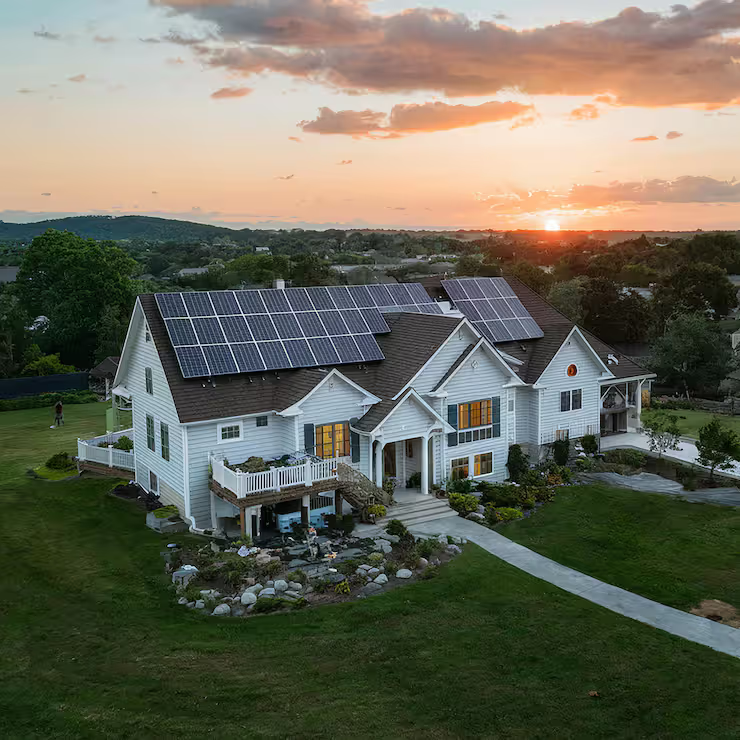
From an energy policy perspective, solar-powered homes also support decentralized electricity generation. This reduces pressure on centralized power plants and transmission networks while enhancing energy resilience at the household level. As a result, solar residential systems are increasingly recognized as a cornerstone of modern clean energy infrastructure.
Why Solar-Powered Homes Matter Today
Energy Security and Reliability
Solar-powered homes contribute to energy independence by enabling households to generate electricity on-site. This reduces vulnerability to grid instability, peak demand pressures, and fuel supply disruptions. In regions experiencing frequent power shortages or load balancing challenges, residential solar electricity generation improves reliability.
Environmental and Climate Impact
Residential solar energy significantly lowers carbon emissions by replacing fossil-fuel-based electricity. This directly supports climate mitigation goals and aligns with national and international sustainability commitments. Solar-powered homes also reduce air pollution, contributing to improved public health outcomes.
Economic and Social Relevance
Solar-powered homes impact a wide range of stakeholders, including homeowners, urban planners, energy regulators, and environmental policymakers. They address challenges such as rising electricity demand, urban carbon footprints, and the need for scalable renewable energy adoption.
Key problems addressed include:
-
Overdependence on conventional electricity grids
-
Increasing residential electricity consumption
-
Environmental degradation linked to fossil fuels
-
Long-term sustainability of urban energy systems
Recent Updates, Trends, and Developments
Technological Advancements (2024–2025)
In 2024, residential solar panel efficiency crossed new benchmarks, with commercial modules exceeding 22% efficiency due to improved cell architecture and materials. Smart inverters with advanced grid-support features became more widely adopted, enabling better voltage regulation and real-time energy monitoring.
Energy Storage Integration
By mid-2024, hybrid solar systems combining photovoltaic panels with lithium-based energy storage gained traction. These systems allow households to store excess electricity for nighttime use or during grid outages, enhancing self-consumption ratios.
Digital Energy Management
In 2025, artificial intelligence-driven home energy management platforms became more common. These platforms analyze usage patterns, weather forecasts, and grid signals to optimize solar electricity utilization within homes.
Urban Planning and Net Metering Evolution
Several countries updated net metering and net billing frameworks in late 2024, refining how excess residential solar electricity interacts with national grids. These updates focused on grid stability, transparent energy accounting, and digital metering standards.
Laws, Policies, and Regulatory Frameworks
India’s Residential Solar Landscape
In India, solar-powered homes are influenced by national renewable energy policies and state-level electricity regulations. The Ministry of New and Renewable Energy (MNRE) continues to promote rooftop solar adoption through structured programs and technical standards.
Key regulatory elements include:
-
Net metering guidelines issued by state electricity regulatory commissions
-
Grid interconnection standards for residential photovoltaic systems
-
Safety and performance standards for solar modules and inverters
Building Codes and Energy Policies
Recent updates to building energy codes encourage solar-ready infrastructure in new residential developments. These codes emphasize rooftop orientation, load-bearing capacity, and electrical conduit planning to support future solar installations.
International Policy Alignment
Globally, residential solar policies align with climate frameworks such as nationally determined contributions (NDCs). Many governments updated their renewable energy roadmaps in 2024 to include higher residential solar capacity targets as part of long-term decarbonization strategies.
Tools, Platforms, and Educational Resources
Several digital tools and informational resources help homeowners and researchers understand solar-powered homes more effectively:
-
Solar Irradiance Mapping Tools – Assess location-based sunlight potential
-
Residential Energy Calculators – Estimate household electricity demand patterns
-
Solar System Design Software – Simulate panel placement and output scenarios
-
Smart Meter Dashboards – Track real-time electricity generation and usage
-
Government Renewable Energy Portals – Provide policy updates, technical guidelines, and educational material
Example Comparison Table: Energy Generation Scenarios
| Parameter | Conventional Home | Solar-Powered Home |
|---|---|---|
| Primary Electricity Source | Grid-based | Solar photovoltaic |
| Carbon Emissions Impact | High | Significantly lower |
| Energy Generation Location | Centralized | On-site |
| Grid Dependency | Full | Partial to minimal |
Common Questions About Solar-Powered Homes
How do solar-powered homes generate electricity?
Solar-powered homes use photovoltaic panels that convert sunlight into direct current electricity. This electricity is then converted into alternating current using inverters, making it suitable for household appliances.
Do solar-powered homes work during cloudy weather?
Yes, solar panels continue generating electricity under diffused sunlight, although output levels are lower compared to clear conditions. System design accounts for seasonal and weather-related variations.
Can solar-powered homes connect to the main electricity grid?
Most residential solar systems operate in grid-connected mode. This allows households to draw electricity from the grid when solar generation is insufficient and feed excess electricity back when generation exceeds usage.
What maintenance is required for residential solar systems?
Maintenance primarily involves periodic panel cleaning, system inspections, and performance monitoring through digital platforms. Modern systems are designed for long operational lifespans with minimal intervention.
Are solar-powered homes suitable for urban environments?
Yes, solar-powered homes are widely deployed in urban settings. Rooftop optimization, shading analysis, and smart energy management enable effective solar adoption even in dense residential areas.
Visual Insight: Typical Solar Energy Flow in Homes
| Stage | Description |
|---|---|
| Sunlight Capture | Panels absorb solar radiation |
| Energy Conversion | Photovoltaic cells generate DC electricity |
| Power Conditioning | Inverters convert DC to AC |
| Household Use | Electricity powers appliances |
| Grid Interaction | Excess energy synchronizes with grid |
Conclusion: The Future of Solar-Powered Homes
Solar-powered homes represent a critical transition in how residential electricity is generated, managed, and consumed. They support energy security, environmental sustainability, and technological innovation without relying on centralized fossil-fuel infrastructure. With continuous improvements in photovoltaic efficiency, energy storage, and digital management tools, solar-powered homes are becoming an integral part of modern housing ecosystems.
As regulatory frameworks evolve and smart energy technologies mature, residential solar adoption is expected to expand further. Solar-powered homes are not only a response to current energy challenges but also a forward-looking solution aligned with long-term climate resilience and sustainable development goals.