Smart Grid Energy Systems An Overview to Explore Basics, Knowledge, and Key Information
Smart Grid Energy Systems represent the evolution of traditional electricity networks into intelligent, data-driven infrastructures. By combining digital communication, automation, and advanced analytics, smart grids enable two-way interaction between power producers, utilities, and consumers. They exist to address the growing complexity of modern power systems, where renewable energy integration, rising electricity demand, and reliability expectations require more than one-directional power flow.
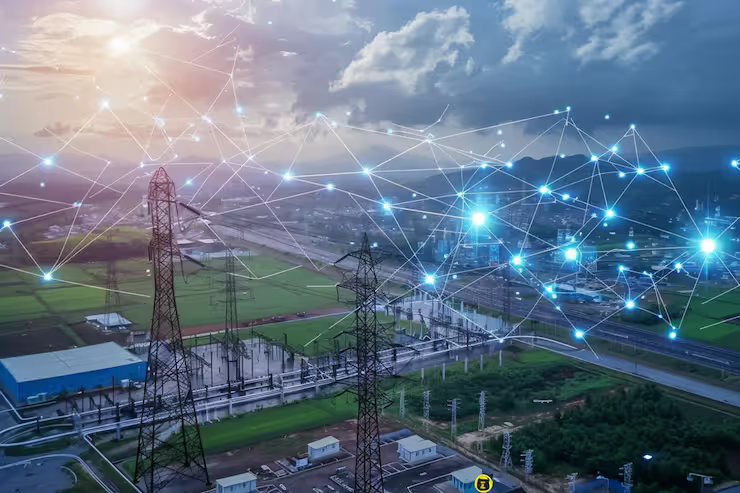
Smart Grid Energy Systems are electricity networks enhanced with sensors, software, and communication technologies. Unlike conventional grids that simply transmit electricity from generation to consumption, smart grids continuously monitor conditions and respond dynamically.
They exist because legacy grids were not designed for:
-
Distributed energy resources such as solar rooftops and wind farms
-
Real-time monitoring and rapid fault detection
-
Active consumer participation in energy usage
Smart grids bridge this gap by enabling automation, digital control, and intelligent decision-making across the entire power value chain—from generation and transmission to distribution and end use.
Key foundational elements include:
-
Advanced metering infrastructure
-
Supervisory control and data acquisition systems
-
Intelligent electronic devices
-
Secure communication networks
Together, these components transform the grid into a responsive and adaptive energy ecosystem.
Importance: Why Smart Grid Energy Systems Matter Today
Smart Grid Energy Systems are critical in today’s energy transition. They directly impact utilities, industries, policymakers, and households by improving efficiency, reliability, and sustainability.
Why this topic matters now
-
Global electricity demand continues to rise due to urbanization and digitalization
-
Renewable energy adoption introduces variability into power supply
-
Extreme weather events increase stress on power infrastructure
Who it affects
-
Power utilities managing grid stability
-
Industrial and commercial electricity users
-
Residential consumers with smart appliances and rooftop generation
-
Governments working toward climate and energy security goals
Problems smart grids help solve
-
Power outages through faster fault detection and isolation
-
Energy losses via optimized load management
-
Grid congestion using real-time data and automation
-
Emissions reduction by enabling cleaner energy integration
Smart grids are not just technical upgrades; they are foundational to resilient and future-ready energy systems.
Recent Updates: Trends and Developments from the Past Year
Over the past year, Smart Grid Energy Systems have seen notable advancements driven by digitalization and clean energy priorities.
Key trends observed in 2025
-
Artificial intelligence integration: Utilities increasingly deploy AI-based forecasting and predictive maintenance tools to anticipate demand and equipment failures.
-
Advanced metering expansion: Large-scale smart meter rollouts continue in Asia and Europe, improving data accuracy and billing transparency.
-
Cybersecurity focus: With more connected devices, grid cybersecurity standards and investments have intensified throughout 2024–2025.
-
Grid-scale energy storage coordination: Smart grids now more actively manage battery systems to balance intermittent renewable generation.
Notable developments
-
In early 2025, International Energy Agency highlighted smart grids as a prerequisite for achieving net-zero power sector goals.
-
During 2024–2025, U.S. Department of Energy expanded digital grid initiatives supporting automation and resilience projects.
These updates indicate a clear shift toward smarter, more adaptive electricity networks worldwide.
Laws or Policies: Regulatory and Government Influence
Smart Grid Energy Systems are strongly shaped by national and regional policies, standards, and incentive programs. Regulations aim to ensure interoperability, data security, and reliability while encouraging modernization.
Policy influences
-
Grid modernization mandates requiring utilities to adopt digital monitoring
-
Renewable energy policies that depend on smart grid capabilities
-
Data protection and cybersecurity regulations for energy infrastructure
Examples of government involvement
-
In India, Ministry of Power supports smart grid deployment through national modernization programs and digital metering initiatives.
-
The European Union enforces grid codes that promote smart technologies for cross-border electricity markets.
-
National regulators often require compliance with international technical standards to ensure system compatibility.
Policy frameworks play a decisive role in accelerating smart grid adoption while safeguarding public interest.
Tools and Resources: Helpful Platforms and References
A wide range of tools and knowledge resources support understanding and implementation of Smart Grid Energy Systems.
Digital tools and platforms
-
Grid simulation and planning software
-
Energy management dashboards for utilities and facilities
-
Demand response modeling tools
-
Load forecasting and analytics platforms
Standards and knowledge resources
-
Technical standards for smart grid interoperability
-
Research publications and grid architecture frameworks
-
Educational portals focused on power system digitalization
Professional references
-
Utility modernization guidelines
-
Smart grid interoperability frameworks
-
Cybersecurity best-practice documentation
These resources help stakeholders design, operate, and evaluate intelligent power networks effectively.
FAQs: Common Questions Answered Clearly
What makes a smart grid different from a traditional grid?
A smart grid uses digital communication and automation to monitor and manage electricity flow in real time, whereas a traditional grid operates with limited visibility and manual control.
How do smart grids support renewable energy?
They balance variable generation from solar and wind sources using real-time data, forecasting, and automated control systems.
Are smart grids only for large utilities?
No. Smart grid concepts apply at multiple scales, from national transmission systems to local distribution networks and microgrids.
Do smart grids improve power reliability?
Yes. Automated fault detection and self-healing capabilities reduce outage duration and improve service continuity.
Is data security a concern in smart grids?
Data protection is a key focus area, with encryption, access control, and cybersecurity standards embedded into smart grid design.
Conclusion
Smart Grid Energy Systems are a cornerstone of modern electricity infrastructure. By combining digital intelligence with physical networks, they address the limitations of traditional grids while enabling cleaner, more reliable, and more efficient power delivery. Their importance continues to grow as energy systems evolve toward decentralization, decarbonization, and digital control.
With ongoing technological advancements, supportive policies, and expanding tools, smart grids are shaping the future of energy management worldwide. Understanding their fundamentals, recent developments, and regulatory context provides valuable insight into how electricity systems are transforming to meet tomorrow’s challenges.