Organic Farming Explained: Knowledge, Suggestions & Practical Insights
Organic farming is an agricultural approach that avoids synthetic fertilizers, pesticides, genetically modified organisms (GMOs), and growth regulators. Instead, it relies on natural processes such as composting, crop rotation, biological pest control, and soil regeneration to produce crops sustainably. Over the past decade, organic farming has gained increasing global attention due to environmental concerns, food safety awareness, and the rising demand for chemical-free produce.
In recent years, this shift has accelerated due to climate change challenges, soil degradation, and growing consumer preference for traceable and sustainable food systems. According to international agricultural reports, organic farmland continues to expand globally, with countries like India, the United States, and several European nations supporting transitions toward sustainable agriculture. India, in particular, has seen steady growth in certified organic farming areas, supported by government initiatives and export demand.
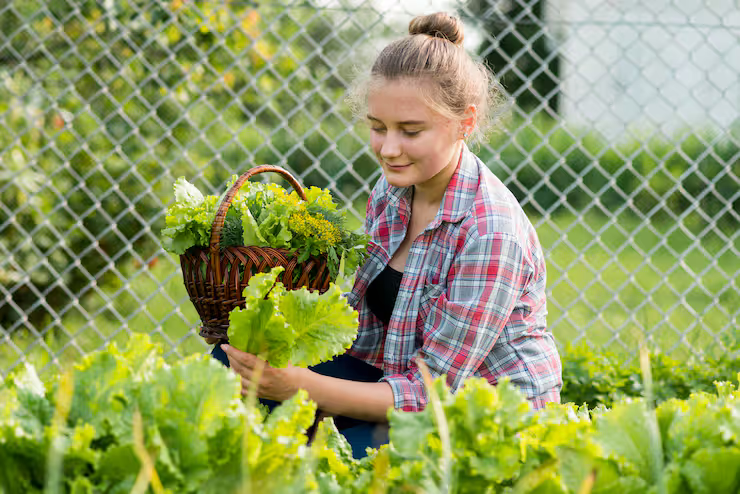
For beginners, understanding organic farming is crucial because it represents not just a method of cultivation but a broader ecological and economic system. This guide provides a structured, data-informed overview of organic farming basics, its relevance today, and how individuals can approach it effectively.
Who It Affects and What Problems It Solves
Organic farming impacts a wide range of stakeholders, including small-scale farmers, large agricultural enterprises, consumers, policymakers, and environmental organizations. For farmers, it offers an alternative to conventional agriculture that often depends heavily on chemical inputs. This shift can improve soil health over time and reduce long-term input costs, although initial transitions may require careful planning and investment.
Consumers are also directly affected, as organic farming contributes to the availability of food products grown with fewer synthetic chemicals. This aligns with increasing awareness around food safety, nutrition, and environmental sustainability. Additionally, rural communities benefit from organic practices that promote biodiversity, reduce water pollution, and encourage sustainable land use.
Problems Organic Farming Solves
- Soil Degradation: Continuous chemical use in conventional farming can reduce soil fertility. Organic farming restores soil structure through compost and natural amendments.
- Water Pollution: Organic practices minimize chemical runoff, protecting groundwater and nearby ecosystems.
- Biodiversity Loss: By avoiding harmful pesticides, organic farms support beneficial insects, birds, and microorganisms.
- Health Concerns: Reduces exposure to synthetic pesticide residues for both farmers and consumers.
- Climate Impact: Organic farming can improve carbon sequestration through better soil management practices.
Recent Updates and Trends in Organic Farming
The past year has seen several notable developments in organic farming, reflecting both technological advancements and policy-driven growth:
- Digital Agriculture Integration: Farmers are increasingly using mobile apps and sensors to monitor soil health, moisture levels, and crop conditions in organic systems.
- Increased Certification Demand: Export markets, particularly in Europe and North America, have raised standards for organic certification, encouraging farmers to adopt stricter compliance measures.
- Government Support Expansion: In India, schemes promoting organic farming clusters and certification assistance have expanded, helping small farmers transition more easily.
- Climate-Resilient Practices: Organic farming is being integrated into climate adaptation strategies, especially in drought-prone regions.
- Urban Organic Farming Growth: Rooftop farming, kitchen gardens, and hydroponic organic systems are gaining popularity in urban areas.
These trends highlight a shift toward combining traditional knowledge with modern tools to improve efficiency and scalability in organic farming.
Comparison Table: Organic vs Conventional Farming
| Factor | Organic Farming | Conventional Farming |
|---|---|---|
| Inputs | Natural fertilizers, compost, bio-pesticides | Synthetic fertilizers, chemical pesticides |
| Soil Health | Improves over time | May degrade with prolonged chemical use |
| Environmental Impact | Lower pollution, supports biodiversity | Higher pollution, affects ecosystems |
| Yield (Short Term) | Slightly lower initially | Generally higher due to chemical inputs |
| Yield (Long Term) | Stable and sustainable | Can decline due to soil degradation |
| Cost Structure | Lower input cost, higher labor | Higher input cost, lower labor |
| Certification Requirement | Required for labeling as organic | Not required |
| Market Demand | Growing steadily | Established but facing sustainability concerns |
Laws, Regulations, and Government Policies
Organic farming is regulated through certification systems and national agricultural policies. In India, the government has introduced several initiatives to support organic farming adoption:
Key Policies and Programs
- Paramparagat Krishi Vikas Yojana (PKVY): Promotes cluster-based organic farming and provides financial assistance for inputs and certification.
- National Programme for Organic Production (NPOP): Defines standards for organic certification and export compliance.
- Participatory Guarantee System (PGS-India): A decentralized certification system suitable for small farmers.
Regulatory Considerations
- Farmers must adhere to strict guidelines regarding input use, crop management, and documentation.
- Certification typically requires a transition period (often 2–3 years) before produce can be labeled as organic.
- Export-oriented farmers must comply with international standards, which may differ slightly from domestic regulations.
Practical Guidance
- Small Farmers: PGS certification is often more accessible and cost-effective.
- Export-Oriented Farms: NPOP certification is essential for international markets.
- Urban Growers: May not require certification unless selling products commercially as “organic.”
Understanding these frameworks is essential for ensuring compliance and accessing market opportunities.
Tools and Resources for Organic Farming
Adopting organic farming can be simplified through the use of modern tools and reliable resources. These help beginners manage processes more efficiently and make informed decisions.
Digital Tools and Apps
- Soil Testing Kits: Help determine nutrient levels and guide composting strategies.
- Farm Management Apps: Track crop cycles, pest control measures, and yield data.
- Weather Forecast Tools: Assist in planning irrigation and planting schedules.
Educational Resources
- Agricultural university websites offering organic farming guides
- Government portals with scheme details and application processes
- Online courses covering composting, pest control, and soil health
Practical Resources
- Composting units and vermiculture setups
- Biofertilizers and natural pest control products
- Seed banks offering non-GMO and heirloom varieties
Using a combination of traditional knowledge and modern tools enhances productivity and reduces uncertainty for beginners.
Frequently Asked Questions (FAQ)
What is the first step in starting organic farming?
The first step is assessing soil health through testing and gradually eliminating chemical inputs while introducing natural alternatives like compost and biofertilizers.
Is organic farming less productive than conventional farming?
In the short term, yields may be slightly lower during the transition phase. However, long-term productivity can stabilize as soil health improves.
How long does it take to get organic certification?
Typically, it takes 2–3 years of following organic practices before certification is granted, depending on regulatory requirements.
What crops are best for beginners in organic farming?
Vegetables like tomatoes, leafy greens, and legumes are often recommended due to their adaptability and shorter growth cycles.
Can organic farming be done on a small scale?
Yes, organic farming is highly suitable for small-scale operations, including kitchen gardens and urban farming setups.
Conclusion
Organic farming represents a sustainable and increasingly relevant approach to agriculture, particularly in the context of environmental challenges and changing consumer preferences. While the transition from conventional methods requires time, knowledge, and careful planning, the long-term benefits such as improved soil health, reduced environmental impact, and stable productivity make it a viable option for many farmers.
Data from global agricultural trends indicates steady growth in organic farming adoption, supported by policy frameworks and market demand. For beginners, starting small, leveraging available tools, and understanding regulatory requirements can significantly improve success rates.
Ultimately, organic farming is not just a method but a system that balances productivity with ecological responsibility. For those seeking a sustainable agricultural pathway, it offers a structured and evidence-based approach worth exploring.