Organic Farming for Beginners An Explore Guide with Basics, Facts, and Practical Knowledge
Organic farming is an agricultural system focused on natural inputs, ecological balance, and long-term soil fertility. It avoids synthetic chemicals and emphasizes biological processes such as composting, crop rotation, green manuring, and natural pest regulation. The concept exists to address the unintended consequences of intensive conventional agriculture, including soil degradation, water contamination, declining biodiversity, and residue concerns in food.
At its core, organic agriculture integrates traditional wisdom with modern agronomic science. Farmers rely on soil health management, biodiversity conservation, and climate-resilient practices to maintain productivity. The approach is knowledge-intensive rather than input-intensive, making it particularly relevant for regions with diverse agro-climatic conditions like India.
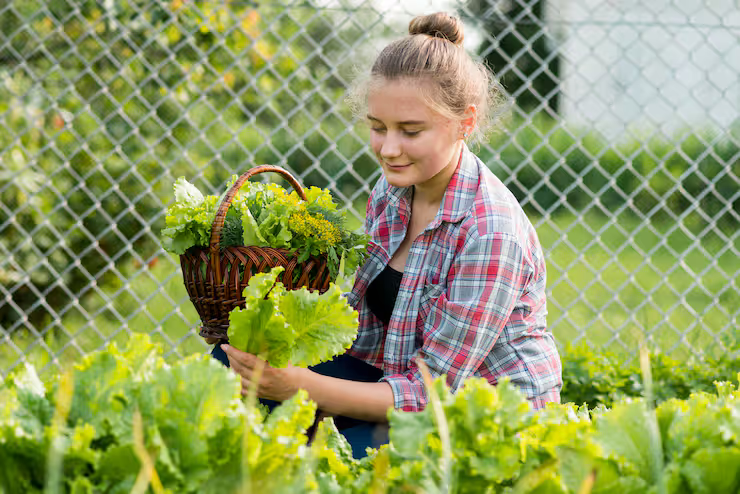
Organic farming also aligns with global sustainability goals by promoting regenerative agriculture, carbon sequestration in soils, and responsible resource use. For beginners, understanding this context clarifies why organic methods are structured around prevention and system balance rather than quick fixes.
Importance: Why Organic Farming Matters Today
Organic farming matters today because it responds to interconnected challenges affecting food systems, ecosystems, and public well-being. It influences farmers, consumers, policymakers, and agri-business stakeholders seeking sustainable agriculture solutions.
Key reasons for its importance include:
-
Soil health improvement through organic matter enrichment and microbial activity
-
Water conservation by enhancing soil structure and moisture retention
-
Biodiversity protection via mixed cropping and habitat preservation
-
Climate resilience through reduced dependence on fossil-fuel-based inputs
-
Food system transparency supported by organic certification standards
For small and marginal farmers, organic practices can stabilize yields over time and reduce vulnerability to input price volatility. Consumers increasingly value traceability, nutritional integrity, and environmental stewardship, driving attention toward certified organic agriculture and natural farming systems.
From a policy perspective, organic farming supports sustainable rural development and aligns with climate-smart agriculture frameworks. It addresses problems such as declining soil organic carbon, pest resistance, and long-term productivity risks associated with monocropping.
Recent Updates: Trends and Developments in the Past Year
Over the past year, organic farming has seen notable developments in technology adoption, policy focus, and market transparency. In 2024, digital traceability tools gained traction, enabling better farm-to-fork documentation aligned with organic certification compliance. Mobile-based farm advisory platforms expanded content on soil testing, bio-inputs, and integrated nutrient management.
Climate-adaptive organic practices became a major trend in 2024–2025, with increased emphasis on:
-
Multi-layer cropping systems
-
Indigenous seed preservation
-
Natural pest management using botanical extracts
Research institutions reported improved outcomes from on-farm trials combining organic amendments with precision irrigation. In mid-2024, several state governments in India highlighted cluster-based organic farming models to strengthen collective learning and certification efficiency.
A visible shift toward data-driven organic agriculture emerged, with satellite imagery and remote sensing supporting crop health monitoring without chemical interventions. These updates indicate a maturing ecosystem where traditional organic principles intersect with modern agri-technology.
Laws and Policies: Regulatory Framework and Government Programs
Organic farming in India operates within a structured regulatory environment designed to ensure credibility and standardization. The National Programme for Organic Production (NPOP) sets the framework for organic standards, accreditation, and labeling, overseen by APEDA. It governs organic certification processes for crops, livestock, and processed products.
Key government initiatives influencing organic farming include:
-
Paramparagat Krishi Vikas Yojana (PKVY), promoting cluster-based organic agriculture and participatory guarantee systems
-
Bharatiya Prakritik Krishi Paddhati (BPKP), focusing on natural farming inputs and traditional practices
-
Mission Organic Value Chain Development for North Eastern Region (MOVCD-NER), strengthening organic value chains
These programs emphasize soil health, on-farm input preparation, and farmer capacity building. Compliance with organic standards requires adherence to defined conversion periods, record-keeping, and residue management protocols, ensuring consistency across regions.
Tools and Resources: Practical Support for Beginners
Beginners benefit from a growing ecosystem of tools and knowledge resources supporting organic agriculture planning and execution. These resources focus on diagnostics, learning, and monitoring rather than commercial transactions.
Helpful tools and platforms include:
-
Soil health cards and digital soil testing dashboards for nutrient status assessment
-
Organic farming calculators estimating compost requirements and crop rotation planning
-
Mobile learning applications offering guides on biofertilizers, vermicomposting, and botanical pesticides
-
Government agriculture portals providing organic standards documentation and advisory content
-
Farm record templates supporting organic certification compliance
Table: Core Tools and Their Purpose
| Tool Category | Primary Use | Practical Benefit |
|---|---|---|
| Soil Testing Tools | Nutrient and pH analysis | Improved soil health management |
| Crop Planning Templates | Rotation and diversity planning | Pest and disease prevention |
| Weather Advisory Apps | Local climate insights | Climate-resilient decisions |
| Certification Guidelines | Compliance reference | Standardized organic practices |
Trend Snapshot: Organic Farming Focus Areas (2023–2025)
| Year | Key Focus Area | Observed Impact |
|---|---|---|
| 2023 | Soil organic carbon | Improved moisture retention |
| 2024 | Digital traceability | Better transparency |
| 2025 | Climate resilience | Stable long-term productivity |
FAQs: Common Questions Answered Clearly
What is the conversion period in organic farming?
The conversion period is the transition phase during which land shifts from conventional to organic management. It typically lasts two to three years, allowing soil and ecosystems to stabilize before full organic recognition.
How does organic farming manage pests naturally?
Natural pest management relies on crop diversity, beneficial insects, botanical extracts, trap crops, and timely agronomic practices rather than synthetic chemicals.
Is organic farming suitable for small landholders?
Yes. With proper planning, mixed cropping, and community-based approaches, organic farming can be adapted to small holdings and diverse agro-climatic zones.
What role does soil organic matter play?
Soil organic matter improves nutrient availability, water retention, and microbial activity, forming the foundation of sustainable agriculture systems.
How is organic produce verified?
Verification occurs through certification systems such as NPOP or participatory guarantee systems, supported by documentation, inspections, and residue testing protocols.
Conclusion: Building a Sustainable Path Forward
Organic farming for beginners is a journey rooted in understanding ecosystems, soil biology, and long-term resource stewardship. It exists to balance productivity with environmental integrity, addressing challenges that modern agriculture faces worldwide. Through supportive policies, evolving tools, and growing scientific validation, organic agriculture continues to gain relevance.
For those starting out, success depends on continuous learning, careful observation, and adherence to established organic standards. By focusing on soil health, biodiversity, and climate resilience, organic farming contributes to a more sustainable and transparent food system without relying on misleading claims or unrealistic promises.