Gas Turbine Plants An Informative Guide to Basics, Working Principles, and Key Facts
Gas turbine plants are power generation systems that convert the chemical energy of fuel into mechanical energy and then into electricity using a rotating gas turbine. They were originally developed for aviation and later adapted for industrial and utility-scale electricity generation due to their high power-to-weight ratio and rapid startup capability.
At their core, these plants operate on the Brayton cycle, where air is compressed, mixed with fuel, combusted, and expanded through a turbine. The turbine shaft drives both the compressor and an electric generator. Compared to steam-based power stations, gas turbine plants require fewer components and less warm-up time, making them suitable for peak load and flexible generation needs.
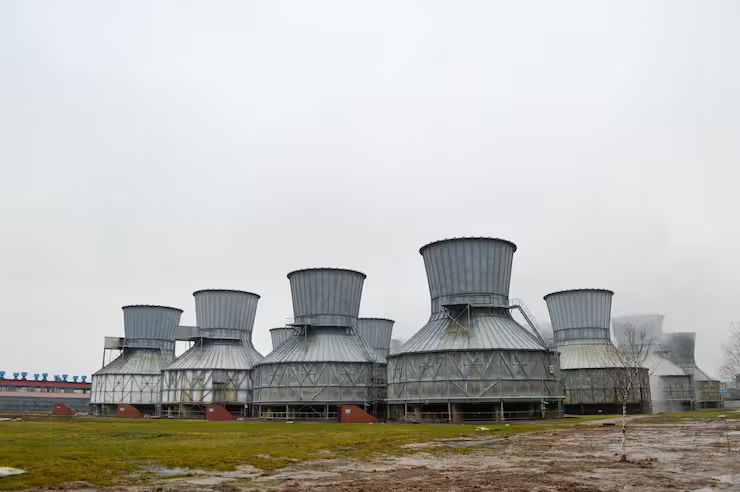
Gas turbine plants exist primarily to address situations where:
-
Power demand changes rapidly
-
Grid stability requires fast-ramping generation
-
Space constraints limit large installations
-
Cleaner-burning fuels are preferred over solid fuels
Over time, their role has expanded from backup and peak-load plants to base-load generation in combined-cycle configurations.
Importance: Why Gas Turbine Plants Matter Today
Gas turbine plants play a critical role in today’s energy landscape, especially as electricity grids become more complex and renewable-heavy.
Relevance in Modern Power Systems
-
They provide fast startup and shutdown, supporting grids with variable demand.
-
They complement intermittent renewable sources like solar and wind.
-
They occupy smaller footprints compared to many conventional plants.
Who Is Affected
-
Power utilities managing grid reliability
-
Industrial facilities requiring on-site power
-
Urban regions with limited space for large plants
-
Policymakers balancing energy security and emissions
Problems They Help Solve
-
Grid instability during peak demand hours
-
Power shortfalls during renewable intermittency
-
Delays associated with slow-start thermal plants
Gas turbine plants are also valued for their adaptability. They can operate in simple-cycle mode for rapid response or in combined-cycle mode to achieve higher efficiency, making them versatile across different operating conditions.
Working Principles Explained Clearly
The operation of a gas turbine plant follows a continuous flow process.
Main operating stages
-
Air compression using an axial or centrifugal compressor
-
Fuel combustion in a combustion chamber
-
Expansion of hot gases through turbine blades
-
Electricity generation via a coupled generator
Key components
-
Air compressor
-
Combustion chamber
-
Gas turbine
-
Generator
-
Exhaust system
In combined-cycle plants, the exhaust heat is recovered to produce steam, which drives a steam turbine for additional power generation. This significantly improves overall efficiency.
Recent Updates: Trends and Developments in the Past Year
The last year has seen notable technical and policy-driven developments in gas turbine technology.
Efficiency and Technology Trends
-
Increased deployment of advanced combined-cycle gas turbine (CCGT) configurations during 2025.
-
Greater focus on hydrogen-blended fuel capability, allowing partial substitution of natural gas.
-
Enhanced turbine blade materials for higher operating temperatures and durability.
Digitalization and Monitoring
-
Wider adoption of AI-based condition monitoring systems.
-
Use of predictive analytics to optimize maintenance schedules and plant availability.
Environmental Developments
-
Ongoing improvements in low-NOx combustor designs.
-
Integration with carbon reduction strategies in hybrid power plants.
These updates reflect a shift toward making gas turbine plants cleaner, smarter, and more compatible with long-term energy transition goals.
Laws and Policies: Regulatory Environment and Government Influence
In India, gas turbine plants operate under a framework of national energy and environmental regulations.
Key regulatory bodies
-
Central Electricity Authority
-
Ministry of Power
-
Central Pollution Control Board
Regulatory considerations
-
Emission norms for nitrogen oxides (NOx) and particulate matter
-
Grid code compliance for frequency and voltage control
-
Fuel usage standards and reporting requirements
Government programs increasingly encourage higher-efficiency plants and cleaner fuels. Gas turbine plants are often positioned as transition technologies supporting renewable integration while maintaining reliability.
Tools and Resources: Helpful References for Learning and Analysis
Several tools and platforms support understanding, analysis, and planning related to gas turbine plants.
Technical and learning resources
-
Gas turbine performance calculators
-
Brayton cycle simulation software
-
Thermodynamic efficiency analysis tools
Data and reference platforms
-
International power generation databases
-
Energy statistics dashboards
-
Technical standard documentation portals
Operational aids
-
Maintenance planning templates
-
Performance benchmarking charts
-
Emission monitoring frameworks
These resources are widely used in academic, industrial, and planning contexts to deepen technical knowledge and operational insight.
Key Performance Metrics at a Glance
| Parameter | Typical Range |
|---|---|
| Operating efficiency (simple cycle) | 30–40% |
| Operating efficiency (combined cycle) | 55–62% |
| Startup time | Minutes |
| Power output range | Few MW to 500+ MW |
| Fuel flexibility | Natural gas, liquid fuels, blends |
Comparative View: Simple vs Combined Cycle
| Feature | Simple Cycle Gas Turbine | Combined Cycle Gas Turbine |
|---|---|---|
| Configuration | Single turbine-generator | Gas + steam turbine |
| Efficiency | Moderate | High |
| Startup speed | Very fast | Fast |
| Typical application | Peak load | Base load |
| Heat recovery | Not used | Utilized via HRSG |
FAQs: Common Questions Answered
What is the main advantage of gas turbine plants?
Their primary advantage is rapid startup and flexible operation, which makes them ideal for meeting fluctuating power demand.
How do gas turbine plants differ from steam power plants?
Gas turbine plants use hot combustion gases directly to drive a turbine, while steam plants rely on steam generated from boiling water.
Are gas turbine plants suitable for renewable integration?
Yes, they are often used to balance variable renewable energy due to their fast response capabilities.
What fuels are commonly used in gas turbine plants?
Natural gas is the most common fuel, with some plants capable of using liquid fuels or fuel blends.
Do gas turbine plants operate continuously?
They can operate continuously in combined-cycle mode or intermittently in simple-cycle mode, depending on system requirements.
Conclusion: Key Takeaways
Gas turbine plants remain a vital part of modern power generation systems. Their flexibility, compact design, and compatibility with advanced cycles make them especially valuable in grids undergoing rapid change. With recent improvements in efficiency, digital monitoring, and fuel adaptability, gas turbine plants continue to evolve alongside cleaner energy goals. Understanding their context, working principles, regulatory framework, and practical tools helps stakeholders make informed decisions about their role in current and future power systems.