Autonomous Vehicles Comparison Guide: Explore Basics, Insights, Facts & Helpful Information
Autonomous vehicles (AVs), commonly referred to as self-driving cars, are vehicles equipped with advanced technologies that enable them to operate with minimal or no human intervention. These systems rely on a combination of sensors, cameras, radar, artificial intelligence (AI), and machine learning algorithms to perceive their environment and make driving decisions in real time. AVs are typically categorized into different levels of automation, ranging from driver assistance to full autonomy.
The comparison of autonomous vehicle systems has become increasingly relevant in recent years due to rapid technological advancements and growing investments by automotive and technology companies. Developments in AI, computing power, and sensor accuracy have accelerated the transition from experimental prototypes to real-world pilot programs. Governments and industries are also exploring AVs to improve road safety, reduce traffic congestion, and enhance mobility.
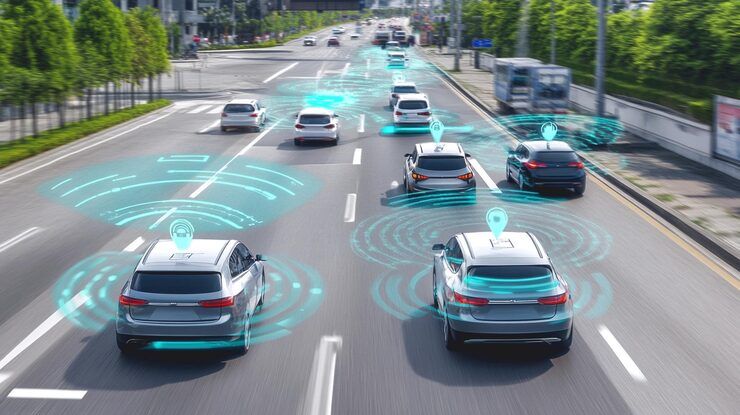
Recent trends indicate a shift toward partial automation features being widely adopted in consumer vehicles, while fully autonomous systems are still under testing and regulatory evaluation. The impact of AVs extends across transportation, logistics, urban planning, and environmental sustainability, making it an important topic for both individuals and policymakers.
Who It Affects and What Problems It Solves
Autonomous vehicles affect a wide range of stakeholders, including individual drivers, transportation companies, urban planners, policymakers, and technology developers. For everyday users, AVs promise enhanced convenience, reduced driving fatigue, and improved accessibility—particularly for elderly individuals or people with disabilities. Businesses in logistics and ride-sharing sectors are also significantly impacted, as automation can improve efficiency and reduce operational costs.
Cities and governments are also key stakeholders. Urban planning may evolve to accommodate smarter traffic systems, reduced parking needs, and optimized road usage. Additionally, insurance and legal sectors must adapt to new risk models and liability frameworks associated with automated driving.
Problems Autonomous Vehicles Aim to Solve
- Human Error in Driving: A large percentage of road accidents are caused by human mistakes such as distraction or fatigue. AVs aim to reduce these incidents through consistent and data-driven decision-making.
- Traffic Congestion: Intelligent routing and communication between vehicles can improve traffic flow and reduce bottlenecks.
- Accessibility Challenges: AVs can provide mobility solutions for individuals who are unable to drive.
- Fuel Efficiency and Emissions: Optimized driving patterns may contribute to lower fuel consumption and emissions.
- Logistics Inefficiencies: Automation in freight and delivery systems can improve supply chain efficiency.
Recent Updates and Trends
The past year has seen notable progress in autonomous vehicle development, though full autonomy remains a work in progress.
- Expansion of Pilot Programs (2025–2026): Several companies have expanded autonomous taxi and delivery services in select urban areas, focusing on controlled environments with mapped routes.
- Improved AI Models: Advances in AI, particularly in perception and decision-making, have enhanced the reliability of object detection and navigation systems.
- Sensor Cost Reduction: The cost of lidar and other sensors has decreased, making integration more feasible in commercial vehicles.
- Focus on Level 2 and Level 3 Systems: Many manufacturers are prioritizing semi-autonomous features such as adaptive cruise control and lane-keeping assistance rather than fully autonomous systems.
- Regulatory Developments: Governments in multiple countries have introduced or updated guidelines for testing and deploying AVs on public roads.
- Safety Evaluations: Independent safety assessments and real-world testing data are increasingly influencing public perception and policy decisions.
Despite these advancements, challenges such as edge-case handling, cybersecurity, and ethical decision-making remain areas of ongoing research.
Comparison of Autonomous Vehicle Levels and Features
| Feature / Aspect | Level 0–1 (Driver Assistance) | Level 2 (Partial Automation) | Level 3 (Conditional Automation) | Level 4–5 (High/Full Automation) |
|---|---|---|---|---|
| Driver Involvement | Full control | Required monitoring | Limited intervention | Minimal to none |
| Examples of Features | Cruise control | Lane assist, autopilot | Traffic jam assist | Fully autonomous navigation |
| Technology Complexity | Low | Moderate | High | Very high |
| Availability | Widely available | Common in new vehicles | Limited availability | Mostly experimental |
| Safety Dependence | Human driver | Shared responsibility | System-dependent | System-dominant |
| Regulatory Approval | Established | Approved | Emerging | Under development |
| Cost Impact | Low | Medium | High | Very high |
Key Observations
- Most commercially available vehicles today fall within Level 1 or Level 2 automation.
- Level 3 systems are emerging but face regulatory and liability challenges.
- Fully autonomous (Level 4–5) vehicles are still in testing and limited deployment phases.
Laws and Policies
Autonomous vehicles are subject to evolving laws and regulatory frameworks, which vary significantly by country.
Regulatory Landscape
- Testing Regulations: Many countries allow controlled testing of AVs under specific conditions, often requiring a safety driver or remote monitoring.
- Liability Frameworks: Determining responsibility in case of accidents—whether it lies with the driver, manufacturer, or software provider—is a key legal challenge.
- Data Privacy: AVs collect large amounts of data, raising concerns about user privacy and cybersecurity.
- Safety Standards: Governments are developing standards for system validation, including simulation testing and real-world trials.
Practical Guidance
- For Consumers: Vehicles with Level 2 features are widely accepted and regulated, making them suitable for everyday use.
- For Businesses: Deployment of higher-level automation may require compliance with local pilot program regulations and safety certifications.
- For Developers: Understanding regional laws is essential when designing and testing AV systems.
Countries such as the United States, Germany, Japan, and China have made significant progress in establishing AV regulations, while others are still in early stages.
Tools and Resources
Several tools and platforms support the development, testing, and understanding of autonomous vehicles:
Development and Simulation Tools
- Autonomous Driving Simulators: Used for testing algorithms in virtual environments.
- AI Frameworks: Machine learning libraries for perception and decision-making models.
- Sensor Calibration Tools: Ensure accurate data from lidar, radar, and cameras.
Educational and Research Resources
- Online courses on AI, robotics, and autonomous systems
- Academic research papers and open datasets
- Industry reports and whitepapers
Navigation and Mapping Tools
- High-definition mapping platforms
- Real-time traffic data systems
- Geographic information systems (GIS)
Safety and Testing Resources
- Scenario-based testing frameworks
- Validation tools for edge-case analysis
- Cybersecurity assessment platforms
These resources are essential for developers, researchers, and organizations working in the AV ecosystem.
FAQ
What are the levels of autonomous vehicles?
Autonomous vehicles are categorized into six levels, from Level 0 (no automation) to Level 5 (full automation), based on the extent of driver involvement and system capability.
Are fully autonomous cars available today?
Fully autonomous vehicles (Level 5) are not yet widely available. Most current vehicles offer partial automation (Level 1–2), with limited Level 3 deployments.
How safe are autonomous vehicles compared to human drivers?
Studies suggest that automation has the potential to reduce accidents caused by human error, but real-world safety depends on system reliability and testing conditions.
What technologies are used in autonomous vehicles?
Key technologies include sensors (lidar, radar, cameras), artificial intelligence, machine learning, and high-performance computing systems.
What challenges do autonomous vehicles face?
Major challenges include handling complex driving scenarios, ensuring cybersecurity, addressing legal and ethical issues, and achieving public trust.
Conclusion
Autonomous vehicles represent a significant technological shift in transportation, with the potential to improve safety, efficiency, and accessibility. However, the comparison across different levels of automation highlights that the industry is still in a transitional phase. While Level 1 and Level 2 systems are widely adopted and practical for everyday use, higher levels of automation remain under development and regulatory evaluation.
Data from recent pilot programs and industry reports indicate steady progress, particularly in controlled environments and semi-autonomous features. However, full autonomy requires further advancements in AI reliability, infrastructure support, and legal frameworks.
From a practical standpoint, individuals and organizations should view autonomous vehicles as an evolving technology rather than a fully mature solution. Adopting currently available features while staying informed about future developments is a balanced approach.