Water Jet Looms: Complete Guide, Insights, Facts, Overview, Basics & Practical Knowledge
Water jet looms are advanced textile machines that use a high-pressure stream of water to propel the weft yarn across the warp threads during fabric production. Unlike traditional shuttle looms or even air jet looms, water jet looms rely on fluid dynamics to insert yarn, making them particularly efficient for specific types of synthetic fibers.
In recent years, the textile industry has been under pressure to improve productivity, reduce operational costs, and minimize environmental impact. This has made water jet looms increasingly relevant, especially in regions with strong synthetic textile manufacturing such as India, China, and Southeast Asia. Their ability to operate at high speeds while maintaining consistent fabric quality makes them a preferred choice for mass production.
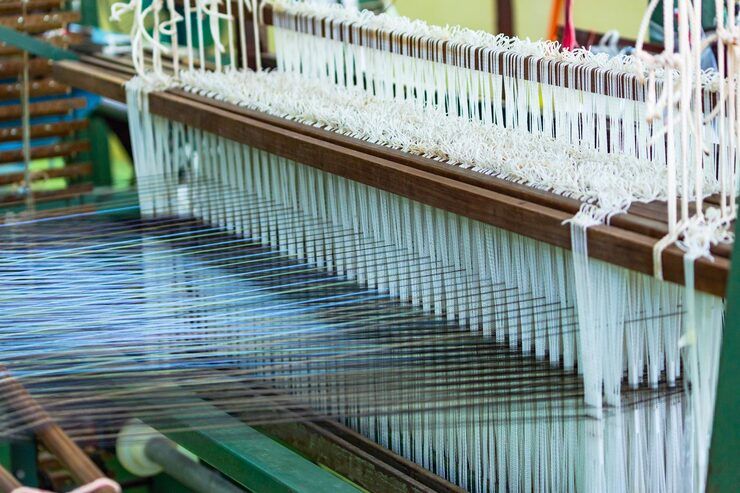
Recent trends show a shift toward automation, energy efficiency, and water recycling technologies in weaving operations. Water jet looms are evolving to meet sustainability expectations while maintaining cost efficiency. As textile demand grows globally, understanding how these machines compare to alternatives and where they fit best has become important for manufacturers, engineers, and industry planners.
Who It Affects and What Problems It Solves
Water jet looms primarily affect textile manufacturers, production managers, and fabric exporters who deal with high-volume synthetic fabric production. Industries such as apparel, home textiles, and industrial textiles benefit from these machines due to their ability to produce lightweight and smooth fabrics efficiently.
Small and medium textile units often face challenges such as high energy costs, inconsistent fabric quality, and slower production speeds. Water jet looms address many of these issues by offering faster weaving speeds and relatively lower energy consumption compared to some other loom types. Additionally, large-scale manufacturers benefit from their automation capabilities, which reduce labor dependency and improve operational consistency.
Problems It Solves
- Low Production Efficiency: Water jet looms operate at very high speeds, increasing output significantly.
- Fabric Quality Issues: They provide uniform weft insertion, reducing defects in synthetic fabrics.
- High Energy Consumption: Compared to air jet looms, they often consume less energy for certain applications.
- Labor Dependency: Automation reduces manual intervention.
- Cost Pressures: Lower operational costs in large-scale production setups.
However, they are not a universal solution. Their use is limited mainly to hydrophobic (water-resistant) yarns such as polyester and nylon.
Recent Updates and Industry Trends
Over the past year, several developments have influenced the adoption and efficiency of water jet looms:
Technological Improvements
Modern water jet looms now include advanced electronic control systems that allow real-time monitoring of weaving parameters. This improves precision and reduces downtime.
Focus on Water Recycling
Environmental concerns have pushed manufacturers to integrate closed-loop water recycling systems. These systems significantly reduce water consumption, addressing one of the biggest criticisms of water jet technology.
Smart Manufacturing Integration
Water jet looms are increasingly being integrated into Industry 4.0 ecosystems. Sensors and IoT-enabled systems help track machine performance, detect faults early, and optimize production cycles.
Shift Toward Synthetic Fabrics
Global demand for synthetic textiles like polyester has grown steadily, especially in sportswear and industrial fabrics. This trend directly supports the adoption of water jet looms.
Regional Expansion
Countries like India are investing in modernizing textile infrastructure through government schemes, encouraging the adoption of efficient weaving technologies, including water jet looms.
Comparative Table: Water Jet Looms vs Other Loom Types
| Feature | Water Jet Looms | Air Jet Looms | Rapier Looms |
|---|---|---|---|
| Weft Insertion Method | Water stream | Air pressure | Mechanical grippers |
| Suitable Yarn Types | Synthetic only | Wide range | Wide range |
| Speed | Very high | High | Moderate |
| Energy Consumption | Moderate | High | Moderate |
| Water Requirement | High (with recycling) | None | None |
| Fabric Quality | Smooth for synthetics | Good | Excellent for variety |
| Maintenance Complexity | Moderate | High | Moderate |
| Environmental Impact | Depends on water reuse | High energy usage | Lower overall impact |
| Initial Investment | Moderate | High | Moderate |
| Best Use Case | Mass synthetic fabrics | High-speed versatility | Diverse fabric types |
Laws or Policies and Practical Guidance
Water jet looms are influenced by environmental and industrial regulations, especially those related to water usage and wastewater management.
Environmental Regulations
In countries like India, textile units must comply with pollution control norms set by state pollution control boards. Since water jet looms use significant amounts of water, manufacturers must install treatment plants or recycling systems to meet discharge standards.
Government Programs
Schemes such as the Technology Upgradation Fund Scheme (TUFS) encourage textile manufacturers to adopt modern machinery. Water jet looms may qualify under such programs, helping reduce capital investment burdens.
Water Usage Policies
Regions facing water scarcity may impose restrictions on industrial water use. This makes it essential for manufacturers to adopt efficient water recycling systems before installing water jet looms.
Practical Guidance
-
Use water jet looms when:
- Producing large volumes of polyester or nylon fabrics
- Operating in regions with stable water supply
- Investing in water recycling infrastructure
-
Avoid or reconsider when:
- Producing natural fibers like cotton
- Operating in water-scarce regions
- Strict environmental compliance is difficult to meet
Tools and Resources
To effectively manage and optimize water jet loom operations, several tools and resources can be useful:
Software Tools
- Textile ERP systems for production planning and inventory management
- Machine monitoring software for real-time performance tracking
Technical Resources
- Industry reports from textile associations
- Manufacturer manuals and training modules
Online Platforms
- Government textile portals for subsidy and compliance information
- Industry forums for troubleshooting and knowledge sharing
Calculation Tools
- Energy consumption calculators
- Water usage and recycling efficiency calculators
Training Resources
- Skill development programs for loom operators
- Technical workshops conducted by textile institutes
Frequently Asked Questions (FAQ)
What are water jet looms best used for?
Water jet looms are best suited for producing synthetic fabrics like polyester and nylon at high speed with consistent quality.
Are water jet looms environmentally friendly?
They can be environmentally responsible if equipped with water recycling systems. Without recycling, water usage can be a concern.
How do water jet looms compare to air jet looms?
Water jet looms are generally more energy-efficient but limited to synthetic fibers, while air jet looms offer more versatility.
Do water jet looms require high maintenance?
Maintenance is moderate but includes managing water systems, filters, and pumps to ensure consistent performance.
Can water jet looms be used for cotton fabrics?
No, they are not suitable for cotton because natural fibers absorb water, which disrupts the weaving process.
Conclusion
Water jet looms represent a specialized yet highly efficient solution in modern textile manufacturing. Their ability to deliver high-speed production with consistent quality makes them particularly valuable for synthetic fabric production. Data and industry observations suggest that they offer a strong balance between productivity and operational cost, especially in large-scale manufacturing environments.
However, their dependency on water and limitation to hydrophobic yarns mean they are not universally applicable. With increasing regulatory focus on water usage, the integration of recycling systems is no longer optional but essential.
For manufacturers focused on polyester or nylon production, water jet looms are a practical and forward-looking investment. For others dealing with diverse or natural fibers, alternative loom technologies may offer better flexibility.