Explore Smart Agriculture Systems A Complete Guide with Basics, Explanation, Facts, and Practical Knowledge
Smart agriculture systems refer to the application of digital technologies, data-driven tools, and automated processes to agricultural activities. These systems combine information technology with traditional farming knowledge to improve how crops are grown, monitored, and managed.
The concept exists because agriculture faces increasing complexity. Population growth, climate variability, water stress, and soil degradation have made traditional farming methods less predictable. Smart agriculture systems emerged to address these challenges by enabling precision, monitoring, and informed decision-making.
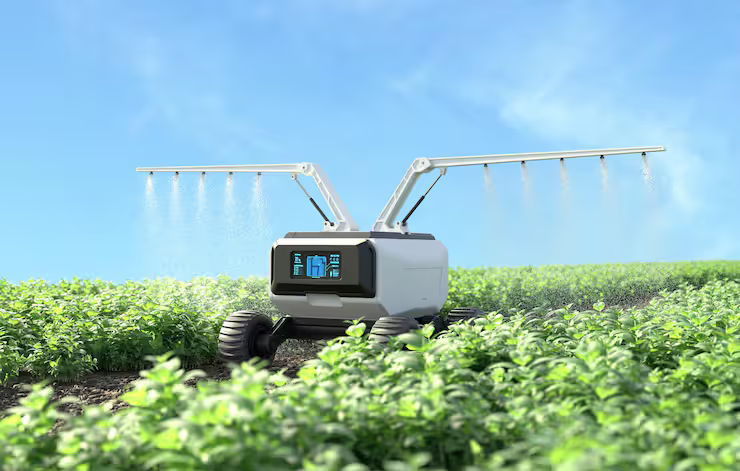
At the core, these systems rely on:
-
Sensors and connected devices for field data
-
Data analytics and machine learning models
-
Satellite imagery and geographic mapping
-
Automated irrigation and nutrient management
-
Digital platforms for farm insights
Smart agriculture systems aim to transform farming from experience-based practices into evidence-based operations.
Importance of Smart Agriculture Systems
Smart agriculture systems matter because they directly affect food security, environmental sustainability, and agricultural productivity. As farming inputs become more limited and climate risks increase, efficient resource use becomes critical.
These systems impact multiple groups:
-
Farmers seeking predictable yields
-
Agronomists and researchers analyzing crop performance
-
Policymakers planning food systems
-
Supply-chain stakeholders tracking production data
Key problems addressed include:
-
Inefficient water and fertilizer usage
-
Unpredictable crop stress due to climate shifts
-
Limited visibility into soil health and crop conditions
-
Delayed detection of pests and diseases
By applying real-time data and predictive insights, smart agriculture systems help reduce uncertainty while supporting informed agricultural planning.
Recent Updates and Trends in Smart Agriculture Systems
The past year has seen notable developments in smart agriculture systems, particularly in data integration and automation.
Key trends observed during 2024–2025 include:
-
Expanded use of AI-based crop monitoring models
-
Increased adoption of satellite-driven field analytics
-
Integration of climate forecasting with farm planning tools
-
Growth of edge computing for on-farm data processing
Technology evolution highlights:
| Area | Recent Advancement |
|---|---|
| Crop Monitoring | AI-powered stress detection using multispectral data |
| Irrigation | Sensor-guided, weather-adaptive water scheduling |
| Soil Analysis | Real-time nutrient and moisture tracking |
| Data Platforms | Unified dashboards combining field, weather, and yield data |
Another notable update is the increasing use of interoperability standards, allowing different smart agriculture tools to share data seamlessly.
Laws, Policies, and Government Programs
Smart agriculture systems are influenced by agricultural digitalization policies, data governance rules, and sustainability programs.
In countries like India, agriculture technology adoption aligns with broader goals related to food security and resource optimization.
Policy-related influences include:
-
National digital agriculture frameworks
-
Data protection and farmer data ownership guidelines
-
Climate-resilient agriculture initiatives
-
Precision farming promotion programs
These policies encourage responsible technology adoption while ensuring transparency, ethical data usage, and long-term sustainability in agricultural ecosystems.
Tools and Resources for Smart Agriculture Systems
A wide range of digital tools and platforms support smart agriculture systems by converting raw field data into actionable insights.
Common tool categories include:
-
Farm management information systems
-
Soil moisture and nutrient analysis platforms
-
Crop growth modeling tools
-
Weather and climate forecasting dashboards
-
Remote sensing and GIS applications
Example tool comparison table:
| Tool Category | Primary Function | Practical Use |
|---|---|---|
| Field Sensors | Data collection | Soil moisture and temperature tracking |
| Satellite Analytics | Remote monitoring | Crop vigor and stress detection |
| Decision Dashboards | Data visualization | Yield planning and risk analysis |
| Climate Models | Forecasting | Seasonal planning support |
These resources help bridge the gap between field conditions and strategic agricultural decisions.
Frequently Asked Questions About Smart Agriculture Systems
What is the main objective of smart agriculture systems?
The main objective is to improve agricultural efficiency, predictability, and sustainability by using data-driven insights rather than guesswork.
How do smart agriculture systems collect data?
Data is collected through sensors, satellites, drones, weather stations, and digital farm records that continuously monitor field conditions.
Are smart agriculture systems suitable for small farms?
Yes, many smart agriculture tools are scalable and can be adapted to different farm sizes, focusing on specific needs such as irrigation or soil monitoring.
Do these systems help with climate risk management?
Yes, by integrating weather forecasts and historical data, smart agriculture systems help anticipate droughts, heat stress, and rainfall variability.
Is technical expertise required to use smart agriculture systems?
Most modern platforms are designed with user-friendly dashboards, allowing users to interpret insights without advanced technical knowledge.
Conclusion
Smart agriculture systems represent a shift toward intelligent, data-driven farming practices. By combining digital tools, real-time monitoring, and predictive analytics, these systems address some of the most pressing challenges facing agriculture today.
They enhance decision-making, support sustainable resource use, and improve resilience against environmental uncertainty. As technology continues to evolve, smart agriculture systems are likely to play an increasingly central role in shaping the future of global food production.