Explore Industrial Gas Systems An Informative Guide with Basics, Facts, and Key Insights
Industrial gas systems refer to integrated technologies used to produce, purify, store, distribute, and monitor gases required for industrial and scientific operations. These systems support gases such as oxygen, nitrogen, hydrogen, argon, carbon dioxide, helium, and specialty gases. Their existence is closely linked to industrialization, advanced manufacturing, and the growing demand for controlled environments in production and research.
The concept emerged with the rise of steelmaking, chemical processing, and energy generation, where precise gas composition and pressure were critical. Over time, industrial gas systems evolved from basic cylinders and pipelines into advanced networks featuring automation, digital monitoring, and high-efficiency separation technologies.
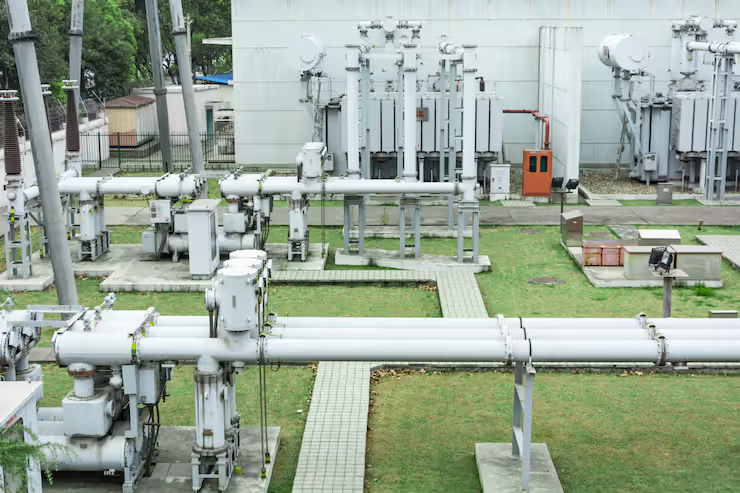
Today, industrial gas infrastructure is a foundational element of sectors such as metallurgy, electronics manufacturing, healthcare facilities, food processing, and renewable energy development. Without reliable gas systems, many modern industrial processes would face efficiency, safety, and quality limitations.
Why Industrial Gas Systems Matter Today
Importance, Applications, and Impact
Industrial gas systems play a vital role in ensuring operational stability, product quality, and workplace safety across multiple sectors. Their relevance has increased significantly due to stricter environmental standards, advanced manufacturing techniques, and energy transition initiatives.
Key industries influenced by industrial gas systems include:
-
Metals and fabrication – oxygen and acetylene for cutting and welding
-
Electronics and semiconductors – ultra-high-purity nitrogen and specialty gases
-
Energy and power generation – hydrogen, oxygen, and nitrogen for efficiency control
-
Healthcare infrastructure – medical-grade oxygen and vacuum systems
-
Food and beverage processing – carbon dioxide and nitrogen for preservation
These systems solve several operational challenges, such as contamination control, combustion efficiency, oxidation prevention, and precision processing. They also help organizations comply with safety regulations by maintaining controlled gas flow, pressure, and purity levels.
The table below highlights common gases and their primary industrial functions:
| Industrial Gas | Primary Use Areas | Functional Purpose |
|---|---|---|
| Oxygen | Steel, healthcare, energy | Combustion and oxidation |
| Nitrogen | Electronics, food processing | Inerting and preservation |
| Hydrogen | Energy, chemicals | Fuel and reduction agent |
| Argon | Welding, metallurgy | Shielding and protection |
| Carbon Dioxide | Food, chemical processes | Cooling and carbonation |
Industrial Gas Systems: Trends and Developments
Recent Updates and Industry Shifts
Over the past year, industrial gas systems have seen notable advancements driven by sustainability goals and digital transformation.
2024–2025 trends include:
-
Hydrogen infrastructure expansion (2024): Increased focus on hydrogen gas systems to support green energy and low-emission industrial processes.
-
Digital gas monitoring (late 2024): Adoption of IoT-enabled sensors for real-time gas flow, pressure, and purity analysis.
-
Energy-efficient air separation units (2025): New designs emphasize reduced power consumption and higher output efficiency.
-
On-site gas generation systems (2024): Growing preference for localized generation to reduce dependency on external supply chains.
A simplified comparison of traditional vs. modern systems is shown below:
| Aspect | Traditional Systems | Modern Systems |
|---|---|---|
| Monitoring | Manual checks | Automated digital dashboards |
| Efficiency | Moderate | High-efficiency designs |
| Safety Control | Reactive | Predictive and preventive |
| Data Usage | Limited | Analytics-driven insights |
These updates reflect a broader shift toward smarter, safer, and more sustainable industrial gas management.
Regulatory Framework and Policy Influence
Laws, Standards, and Compliance
Industrial gas systems are heavily influenced by safety, environmental, and quality regulations. In India, these systems are governed by a combination of national standards and international guidelines.
Key regulatory influences include:
-
Gas Cylinder Rules (amended periodically): Govern storage, transport, and handling of compressed gases.
-
Factory safety regulations: Mandate proper ventilation, leak detection, and emergency shutdown systems.
-
Environmental compliance policies: Control emissions, energy efficiency, and waste management related to gas usage.
-
International standards (ISO series): Provide benchmarks for gas purity, system design, and operational safety.
Government programs promoting clean energy and advanced manufacturing indirectly support the modernization of industrial gas infrastructure, particularly in hydrogen and low-emission technologies.
Compliance with these policies helps reduce industrial accidents, ensures environmental protection, and promotes standardized operational practices.
Tools, Platforms, and Knowledge Resources
Practical Tools and Reference Materials
Managing industrial gas systems requires access to accurate data, calculation tools, and technical documentation. Commonly used resources include:
-
Gas flow calculators – Assist in determining flow rates and pressure requirements
-
Material compatibility charts – Help assess gas interaction with metals and seals
-
Process simulation software – Model gas behavior in complex systems
-
Industry standards databases – Provide access to ISO and safety guidelines
-
Technical handbooks and reference manuals – Offer foundational knowledge and best practices
Below is an example table illustrating common calculation parameters:
| Parameter | Description | Typical Application |
|---|---|---|
| Flow rate | Volume per unit time | Pipeline design |
| Pressure | Force exerted by gas | Storage safety |
| Purity level | Percentage of target gas | Electronics manufacturing |
| Temperature | Operating condition | Cryogenic systems |
These tools support informed decision-making and system optimization across industrial environments.
Frequently Asked Questions About Industrial Gas Systems
What is the primary function of industrial gas systems?
Industrial gas systems are designed to safely produce, store, and deliver gases at required purity and pressure levels for industrial and scientific processes.
Which industries rely most on industrial gas infrastructure?
Major users include manufacturing, energy, healthcare facilities, electronics production, food processing, and chemical industries.
How do industrial gas systems improve safety?
They incorporate pressure control, leak detection, automated shut-off mechanisms, and compliance with safety standards to minimize operational risks.
What role do industrial gas systems play in sustainability?
Modern systems focus on energy efficiency, reduced emissions, and support for clean energy gases such as hydrogen and oxygen-enriched processes.
Are industrial gas systems standardized globally?
While core principles are universal, specific standards vary by country and are aligned with international frameworks such as ISO and safety codes.
Final Thoughts and Key Takeaways
Conclusion and Practical Insights
Industrial gas systems form the backbone of modern industrial operations, enabling precision, efficiency, and safety across diverse sectors. From traditional manufacturing to advanced electronics and clean energy initiatives, their role continues to expand in scope and sophistication.
Recent innovations emphasize digital monitoring, energy optimization, and environmental responsibility. Regulatory frameworks further ensure safe handling and standardized practices, reinforcing trust and reliability in industrial environments.
A solid understanding of industrial gas systems—covering their context, importance, evolving trends, compliance requirements, and practical tools—helps professionals and learners alike navigate this critical industrial domain with clarity and confidence.