Explore Green Hydrogen Storage A Complete Guide with Basics, Explanation, and Key Insights
Green hydrogen storage refers to the methods and systems used to store hydrogen produced through renewable-powered electrolysis. As renewable energy sources such as solar and wind generate variable output, green hydrogen acts as an energy carrier that can be stored and used when needed. Storage is a critical link between clean hydrogen production and its real-world applications.
Hydrogen storage exists to solve one core challenge: balancing energy generation with energy demand over time. Unlike electricity, hydrogen can be stored for extended periods without self-discharge, making it suitable for seasonal energy balancing and large-scale energy systems.
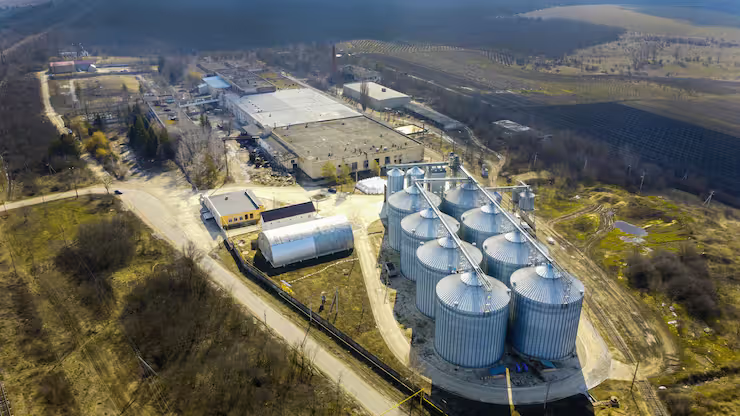
Green hydrogen storage technologies have evolved alongside decarbonization goals, energy security planning, and renewable grid integration strategies. They are now considered foundational elements of future low-carbon energy infrastructure.
Why Green Hydrogen Storage Matters Today
The importance of green hydrogen storage has increased as countries aim to reduce fossil fuel dependence and improve grid resilience. Renewable energy penetration continues to rise, but intermittency remains a technical limitation. Hydrogen storage addresses this challenge by enabling surplus renewable energy to be converted into a storable form.
Key stakeholders affected by hydrogen storage development include:
-
Power generation and grid operators
-
Industrial energy users
-
Transportation and mobility sectors
-
Policymakers and climate planners
-
Research institutions and technology developers
Green hydrogen storage helps solve several systemic problems:
-
Renewable energy curtailment during peak generation
-
Long-duration energy storage gaps
-
Energy security risks linked to fuel imports
-
Industrial decarbonization barriers
From an environmental perspective, green hydrogen storage supports climate mitigation targets by enabling deeper renewable integration without increasing emissions.
Green Hydrogen Storage Types and Core Technologies
Several storage methods are used depending on scale, application, and storage duration.
Common hydrogen storage approaches
-
Compressed gaseous hydrogen storage
-
Liquid hydrogen storage
-
Solid-state hydrogen storage
-
Underground hydrogen storage
Each method has unique characteristics related to energy density, safety, and system complexity.
Table: Overview of Green Hydrogen Storage Methods
| Storage Method | Typical Pressure/State | Energy Density | Key Use Case |
|---|---|---|---|
| Compressed Gas | High-pressure gas | Medium | Mobility, grid balancing |
| Liquid Hydrogen | Cryogenic liquid | High | Long-distance transport |
| Solid-State | Metal hydrides | Medium–High | Stationary systems |
| Underground Caverns | Geological storage | Very High | Seasonal storage |
These storage options are selected based on operational requirements rather than a single universal solution.
Recent Developments and Trends in Green Hydrogen Storage
Over the past year, green hydrogen storage has seen accelerated research, pilot deployments, and policy-driven momentum.
In early 2024, several regions expanded hydrogen storage demonstrations linked to renewable energy hubs. Increased focus was placed on underground hydrogen storage using salt caverns, particularly for long-duration and seasonal energy storage.
By mid-2024, advancements in solid-state hydrogen materials showed improved absorption efficiency and reduced degradation cycles. These developments are relevant for stationary storage systems and grid-support applications.
Late 2024 trends highlighted integration between hydrogen storage and power-to-gas systems, allowing surplus renewable electricity to be stored at scale. Digital monitoring and predictive analytics also gained attention, improving storage safety and performance tracking.
Overall, the past year emphasized scalability, system integration, and safety standardization rather than isolated technology breakthroughs.
Policy Frameworks and Government Programs Influencing Hydrogen Storage
Green hydrogen storage is shaped by national energy policies, climate action plans, and infrastructure development programs. Governments view storage as a strategic asset for achieving net-zero targets and improving grid flexibility.
Policy influences commonly include
-
National hydrogen strategies
-
Renewable energy integration mandates
-
Grid modernization initiatives
-
Research and innovation frameworks
-
Energy security roadmaps
In countries with strong renewable targets, hydrogen storage is increasingly included in long-term energy planning documents. Regulatory frameworks typically focus on safety standards, environmental compliance, and system interoperability rather than commercial incentives.
Public-sector research funding continues to support hydrogen storage modeling, material science, and system optimization.
Practical Tools, Platforms, and Educational Resources
A wide range of analytical and educational resources support understanding and planning for hydrogen storage systems.
Useful tools and resources
-
Hydrogen storage simulation models
-
Energy system modeling platforms
-
Electrolysis-to-storage calculators
-
Hydrogen safety guidelines and standards portals
-
Academic research databases
-
Renewable-to-hydrogen conversion toolkits
Table: Example Resource Categories
| Resource Type | Purpose |
|---|---|
| Simulation Tools | Storage sizing and performance modeling |
| Safety Frameworks | Risk assessment and compliance guidance |
| Research Platforms | Access to peer-reviewed studies |
| Grid Integration Models | Power-to-hydrogen system analysis |
These resources help researchers, planners, and analysts evaluate storage feasibility without promotional or commercial emphasis.
Common Questions About Green Hydrogen Storage
What makes green hydrogen storage different from conventional hydrogen storage?
Green hydrogen storage focuses specifically on hydrogen produced using renewable electricity, ensuring low lifecycle emissions compared to fossil-derived hydrogen pathways.
Is hydrogen storage suitable for long-duration energy storage?
Yes. Hydrogen storage is one of the few solutions capable of storing energy for weeks or months, making it suitable for seasonal balancing.
How safe are hydrogen storage systems?
Modern storage systems follow strict safety standards, incorporating monitoring, pressure control, and material integrity measures.
Can hydrogen storage support industrial decarbonization?
Hydrogen storage enables industries to access clean energy during non-renewable generation periods, supporting low-emission processes.
Does hydrogen storage work with existing energy infrastructure?
In many cases, hydrogen storage systems can integrate with modified pipelines, power systems, and industrial facilities.
Key Insights and Future Outlook
Green hydrogen storage is not a standalone technology but a system-level enabler of clean energy transformation. Its value lies in flexibility, scalability, and compatibility with renewable generation.
As renewable energy capacity expands globally, the role of hydrogen storage will continue to grow. Ongoing research, policy alignment, and infrastructure planning are expected to improve efficiency, safety, and system integration.
In the long term, green hydrogen storage is likely to function as a backbone technology for resilient, low-carbon energy systems, supporting power generation, industry, and mobility without compromising environmental goals.