Electric Vehicle Management: Guide, Insights, Tips, and Comprehensive Overview of Systems, Strategies, and Resources
Electric Vehicle (EV) management refers to the coordinated handling of electric vehicles, charging infrastructure, energy usage, and operational data to ensure efficiency, sustainability, and cost control. It involves a combination of software platforms, hardware systems, and operational strategies designed to optimize vehicle performance, battery health, and charging schedules.
In recent years, EV management has become increasingly relevant due to the rapid adoption of electric mobility across passenger vehicles, commercial fleets, and public transportation systems. Governments worldwide are promoting electrification through incentives and infrastructure investments, while businesses are transitioning fleets to reduce emissions and operational costs.
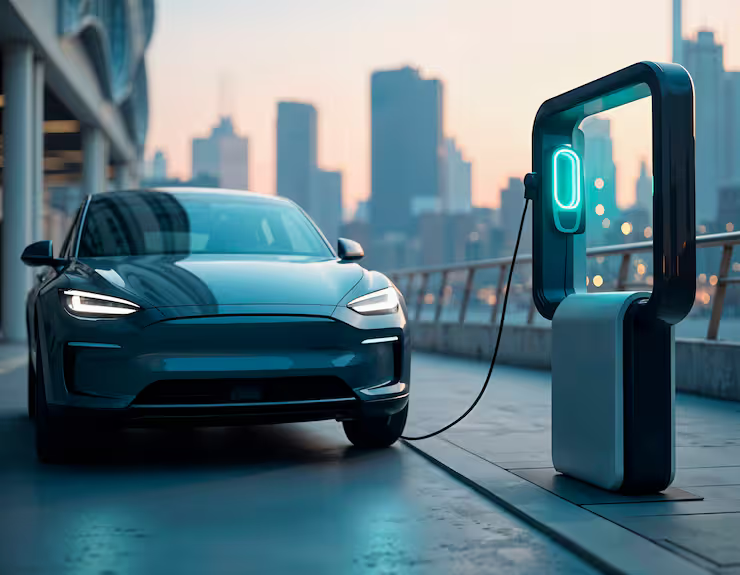
Key trends shaping EV management include the integration of smart charging systems, the use of telematics for real-time monitoring, and the growing role of renewable energy in powering vehicles. Additionally, advancements in battery analytics and predictive maintenance are improving efficiency and reducing downtime. As EV adoption scales, effective management systems are becoming essential to address challenges such as grid load balancing, charging availability, and lifecycle cost optimization.
Who It Affects and What Problems It Solves
Electric vehicle management impacts a wide range of stakeholders, including individual EV owners, fleet operators, logistics companies, energy providers, and urban planners. For private users, EV management tools simplify charging decisions, monitor battery health, and optimize energy consumption. For businesses, especially those operating delivery or transportation fleets, these systems are critical for maintaining uptime, reducing fuel costs, and ensuring operational efficiency.
Municipal authorities and governments also rely on EV management systems to support public charging infrastructure, manage grid demand, and achieve environmental targets. Energy companies benefit by integrating EV charging into smart grid systems, enabling better demand forecasting and load balancing.
Problems It Solves
- Charging inefficiencies: Smart scheduling reduces peak-time congestion and energy costs.
- Range anxiety: Real-time data helps users plan routes and charging stops effectively.
- Battery degradation: Monitoring tools provide insights to extend battery life.
- Operational downtime: Predictive maintenance minimizes unexpected failures.
- Energy demand spikes: Load management systems balance grid pressure.
- Data fragmentation: Centralized platforms unify vehicle, charging, and performance data.
Recent Updates and Trends
Over the past year, several developments have influenced EV management:
- Smart Charging Expansion: Many regions have adopted dynamic pricing and time-of-use tariffs, encouraging off-peak charging.
- Vehicle-to-Grid (V2G) Integration: Pilot programs are enabling EVs to return energy to the grid, supporting energy stability.
- AI-Based Fleet Optimization: Machine learning tools are being used to predict energy needs, optimize routes, and reduce idle time.
- Battery Analytics Improvements: Advanced diagnostics now allow more accurate predictions of battery lifespan and performance.
- Charging Network Growth: Public and private charging infrastructure has expanded significantly, especially in urban and highway corridors.
- Standardization Efforts: Interoperability between charging networks and vehicles is improving through global standards.
These updates indicate a shift from simple vehicle electrification to integrated energy and mobility ecosystems.
Comparison Table: Key EV Management Components
| Component | Description | Key Benefit | Common Use Case |
|---|---|---|---|
| Fleet Management Systems | Software for tracking and optimizing EV fleets | Improved operational efficiency | Logistics and delivery companies |
| Charging Management Tools | Platforms for scheduling and monitoring charging | Reduced energy costs | Public and private charging stations |
| Battery Management System | Monitors battery health and performance | Extended battery lifespan | All EV types |
| Telematics Systems | Collects real-time vehicle data | Better decision-making | Fleet operators |
| Energy Management Systems | Integrates EVs with grid and renewable sources | Grid stability and cost savings | Utilities and large facilities |
| Route Optimization Tools | Uses data to plan efficient travel routes | Reduced energy consumption | Ride-sharing and logistics |
Laws and Policies Affecting EV Management
Electric vehicle management is heavily influenced by national and regional policies, particularly in countries like India where EV adoption is a strategic priority.
Key Regulatory Areas
- Incentive Programs: Government initiatives such as subsidies and tax benefits encourage EV adoption and infrastructure development.
- Charging Infrastructure Policies: Regulations define standards for public charging stations, including safety, interoperability, and pricing transparency.
- Emission Targets: Policies aimed at reducing carbon emissions push organizations toward electric mobility solutions.
- Energy Regulations: Time-of-use tariffs and renewable energy mandates affect how and when EVs are charged.
Practical Guidance
- For fleet operators: Align charging schedules with off-peak tariffs to reduce costs.
- For businesses: Invest in compliant charging infrastructure to meet regulatory requirements.
- For individuals: Utilize government incentives and approved charging networks.
- For developers: Ensure systems support interoperability standards to remain future-proof.
Tools and Resources for EV Management
A variety of tools and platforms support effective EV management:
Software Platforms
- Fleet management dashboards with real-time analytics
- Charging management systems with scheduling capabilities
- Mobile apps for monitoring vehicle status and charging
Analytical Tools
- Battery health calculators
- Energy consumption trackers
- Predictive maintenance software
Infrastructure Resources
- Public charging station locators
- Smart charging hardware with load balancing
- Renewable energy integration systems
Online Resources
- Government portals for EV incentives and policies
- Industry reports on EV adoption trends
- Open data platforms for charging networks
These tools help users make informed decisions, optimize operations, and adapt to evolving EV ecosystems.
Frequently Asked Questions
What is electric vehicle management?
Electric vehicle management involves monitoring, controlling, and optimizing EV operations, including charging, battery health, and energy usage.
Why is EV management important for fleets?
It helps reduce operational costs, improve efficiency, and ensure vehicles remain available and functional with minimal downtime.
How does smart charging work?
Smart charging schedules EV charging during off-peak hours or when energy prices are lower, often using automated systems.
What is the role of battery management systems?
Battery management systems track performance, prevent overheating, and extend battery lifespan through controlled usage.
Are there tools available for individual EV owners?
Yes, many mobile apps and onboard systems provide real-time data on charging, range, and battery health.
Conclusion
Electric vehicle management is a critical component of modern mobility systems, especially as EV adoption accelerates globally. Data-driven tools and integrated platforms are transforming how vehicles, energy, and infrastructure interact. From reducing operational costs to improving sustainability outcomes, effective EV management provides measurable benefits across multiple sectors.
Recent trends such as smart charging, AI-driven optimization, and vehicle-to-grid integration highlight the growing complexity and opportunity within this field. Regulatory frameworks and government initiatives further shape how EV systems are deployed and managed.
For individuals, the focus should be on leveraging available tools to monitor and optimize usage. For businesses and fleet operators, investing in comprehensive management systems is essential for scalability and efficiency. Overall, the most effective approach combines technology, policy awareness, and data-driven decision-making to maximize the benefits of electric mobility.