Electric Vehicle Platforms Design An Exploratory Guide with Basics, Architecture, and Key Insights
Electric Vehicle (EV) platform design refers to the underlying structural, electrical, and software architecture that supports an electric vehicle. Unlike traditional internal combustion layouts, EV platforms are engineered around high-voltage battery packs, electric drive units, power electronics, and digital control systems. The concept exists to unify these elements into a scalable base that can support multiple vehicle types while maintaining safety, efficiency, and performance.
Modern EV platforms typically adopt a “skateboard” layout, where the battery pack forms a flat structural layer between the axles. Motors, inverters, and thermal systems are mounted around this core. This configuration improves weight distribution, lowers the center of gravity, and simplifies manufacturing. Platform-centric design emerged as automakers and technology firms recognized that electrification requires a fundamentally different engineering approach rather than adapting legacy vehicle frames.
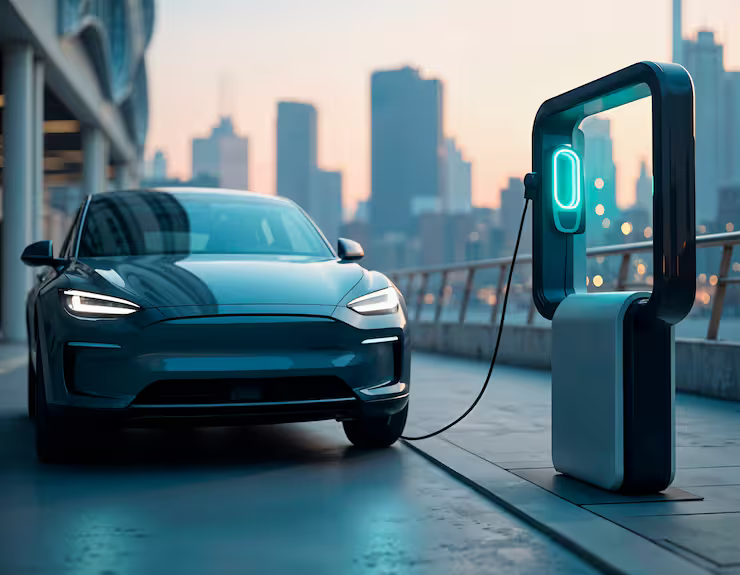
Key architectural building blocks include:
-
High-energy-density battery modules integrated into the chassis
-
Electric motors with single-speed or multi-ratio reduction gearing
-
Power electronics such as inverters and DC-DC converters
-
Vehicle control units and embedded software layers
-
Thermal management systems for batteries and electronics
These elements work together to form a unified EV architecture optimized for electrified mobility.
Why Electric Vehicle Platform Design Matters Today
EV platform design has become central to the global automotive transition. As electrification accelerates, platforms influence vehicle range, safety, digital capability, and lifecycle efficiency. A well-engineered platform can support multiple body styles, reduce development complexity, and improve overall system reliability.
This topic matters to:
-
Automotive engineers and product architects shaping next-generation vehicles
-
Policy planners and infrastructure stakeholders aligning transport goals
-
Investors and analysts tracking electrification technology maturity
-
Academic researchers studying sustainable mobility systems
From a problem-solving perspective, EV platforms address challenges such as battery packaging constraints, thermal safety, electrical isolation, and software integration. Advanced platforms also enable features like over-the-air updates, advanced driver assistance systems, and energy-efficient powertrain control.
Strategic benefits include:
-
Improved energy efficiency through optimized weight distribution
-
Enhanced safety via rigid battery enclosures and crash structures
-
Faster innovation cycles using modular platform strategies
-
Digital readiness for connected and autonomous vehicle features
As electrification scales, platform design directly influences how quickly new models reach the road and how effectively they perform in real-world conditions.
Recent Updates and Industry Trends (2025)
Over the past year, EV platform innovation has accelerated, driven by battery chemistry advances and software-defined vehicle strategies. In mid-2025, several manufacturers announced next-generation platforms supporting higher voltage architectures, moving from 400-volt systems toward 800-volt configurations to enable faster charging and reduced thermal losses.
Notable trends observed during 2025 include:
-
Structural battery packs, where battery modules contribute to vehicle rigidity
-
Increased use of silicon carbide power electronics for higher efficiency
-
Platform standardization across global vehicle lineups
-
Greater separation of hardware and software layers within EV architectures
Another important development has been the integration of centralized computing. Instead of dozens of distributed controllers, newer platforms use high-performance domain controllers to manage powertrain, chassis, and infotainment functions. This shift simplifies wiring harnesses and enhances cybersecurity.
Battery recycling and second-life planning have also influenced platform decisions. Designers now consider disassembly and material recovery at the earliest architecture stages, aligning with sustainability goals and regulatory expectations.
Laws, Regulations, and Government Programs
EV platform design is shaped by regulatory frameworks focused on safety, emissions reduction, and energy efficiency. In India, government initiatives emphasize localized EV manufacturing, battery safety standards, and domestic value creation. Programs encourage standardized platforms that can support multiple vehicle categories while complying with homologation norms.
Key regulatory influences include:
-
Battery safety and thermal runaway prevention guidelines
-
Electrical safety standards for high-voltage systems
-
Localization and manufacturing incentive programs
-
Recycling and end-of-life compliance requirements
Globally, regulations increasingly reference software integrity, cybersecurity, and data handling within vehicle platforms. This has pushed designers to embed secure communication protocols and redundancy at the platform level rather than treating software as an add-on.
Compliance considerations now span mechanical design, electrical architecture, and digital governance, making platform engineering a multidisciplinary exercise aligned with policy objectives.
Tools, Frameworks, and Practical Resources
Designing EV platforms relies on a combination of engineering software, simulation environments, and reference frameworks. These tools support concept validation, safety analysis, and lifecycle planning without physical prototyping at early stages.
Commonly used resources include:
-
Vehicle architecture modeling software for layout optimization
-
Battery simulation tools for thermal and electrical behavior analysis
-
Power electronics design platforms for inverter efficiency modeling
-
Digital twin environments to test platform performance virtually
-
Open technical standards for charging and communication interfaces
Reference documents from automotive engineering bodies and academic research papers also provide validated methodologies for platform development. These resources help teams align performance targets with regulatory and environmental constraints.
Frequently Asked Questions
What is an EV skateboard platform?
An EV skateboard platform is a flat vehicle architecture where the battery pack sits low in the chassis, with motors and electronics mounted around it, enabling modular vehicle designs.
How does platform design affect driving range?
Efficient packaging, reduced weight, and optimized power electronics directly influence energy consumption, which impacts overall driving range.
Are EV platforms vehicle-type specific?
Many modern platforms are modular, supporting multiple body styles such as sedans, SUVs, and commercial vehicles with shared core components.
Why are higher voltage platforms becoming common?
Higher voltage architectures reduce current flow, improving efficiency and thermal performance while supporting rapid charging technologies.
Do EV platforms include software architecture?
Yes. Modern platforms integrate hardware and software layers, enabling digital features, diagnostics, and update capabilities throughout the vehicle lifecycle.
Key Architecture Elements at a Glance
| Platform Component | Primary Role | Design Consideration |
|---|---|---|
| Battery Pack | Energy storage | Thermal safety, structural integrity |
| Electric Motor | Propulsion | Efficiency, torque density |
| Inverter | Power conversion | Switching losses, cooling |
| Control Units | System coordination | Cybersecurity, redundancy |
| Chassis Structure | Load distribution | Crash safety, rigidity |
Insights and Strategic Takeaways
Electric Vehicle platform design has evolved into the backbone of modern automotive engineering. It combines mechanical structures, electrical systems, and digital intelligence into a unified foundation. As regulations tighten and consumer expectations rise, platforms must deliver safety, efficiency, and adaptability simultaneously.
The shift toward modular, software-defined platforms indicates that future competitiveness will depend less on individual components and more on how effectively they are integrated. For stakeholders across engineering, policy, and research domains, understanding EV platform architecture is essential to navigating the next phase of mobility transformation.